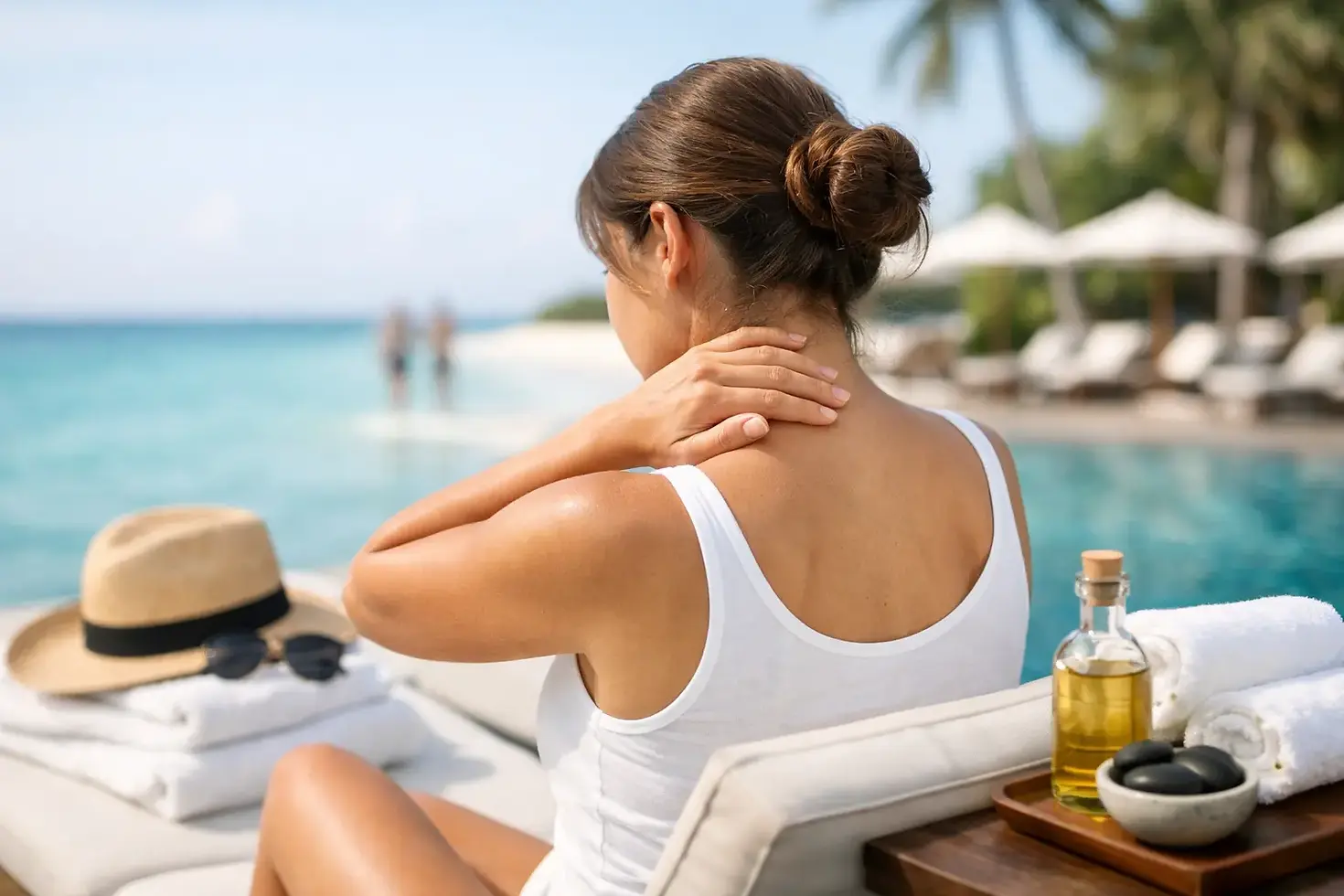
Cómo aliviar tensión muscular en vacaciones
- Denilson Sanchez
- 23 may
- 6 min de lectura

You finally made it to vacation, and somehow your shoulders are still up by your ears. A long flight, a soft hotel bed, too much walking in sandals, one adventurous surf lesson, and suddenly the question becomes very real: cómo aliviar tensión muscular vacaciones without losing a day of the trip.
The truth is, muscle tension loves travel. It shows up after cramped plane seats, heavy bags, unfamiliar pillows, dehydration, and those full vacation days when you do more than your body is used to. Even relaxing destinations can leave you feeling tight, sore, and oddly tired. The good news is that you do not need to choose between exploring and recovery. With the right rhythm, you can bring your body back to that lighter, looser, vacation-state feeling.
Cómo aliviar tensión muscular vacaciones without slowing down
The first step is simple - stop treating muscle tension like a small annoyance that will disappear on its own. Sometimes it does. Often, it builds. A tight neck turns into a headache. Sore calves make every walk feel heavier. A stiff lower back can change the way you sleep, which affects how you feel the next day.
On vacation, the best approach is early relief. When you respond quickly, tension is usually easier to calm. That does not mean turning your trip into a wellness boot camp. It means making a few smart choices that help your body recover while you keep enjoying yourself.
Start with hydration. Heat, sun, cocktails, salty meals, and long hours outdoors can all leave muscles feeling more reactive and fatigued. Water sounds basic because it is, but it matters. If you are spending the day at the beach or walking around town, drink more than you think you need.
Then pay attention to how you move in the morning and at night. Vacation routines tend to be all or nothing - total stillness followed by sudden activity. A few minutes of gentle stretching when you wake up can make a noticeable difference, especially for the hips, calves, shoulders, and lower back. At night, a short reset before bed helps your body soften instead of carrying the day into sleep.
Why travel creates so much hidden tension
Most people expect soreness after a hike or a workout. They do not expect it after sitting on a plane, lounging by the pool, or walking through a beach town. But travel tension is often less about intensity and more about accumulation.
Planes and cars keep the body in one position for too long. Luggage adds asymmetrical strain, especially when you carry a bag on one shoulder. Hotel pillows may not support your neck the way you are used to. Even joyful things - dancing, swimming, sightseeing, exploring - can overload muscles that have been mostly inactive at home.
There is also the nervous system side of it. Travel is exciting, but it is still stimulating. New places, new schedules, noise, heat, and crowds can keep the body subtly braced. You might feel mentally happy and physically tense at the same time. That is more common than people realize.
This is why quick fixes do not always work. If the body is dehydrated, overtired, overstimulated, and physically tight, it needs more than a single stretch. It needs recovery that feels good and fits the vacation mood.
The fastest ways to feel better the same day
If your muscles already feel tight, focus on what brings down intensity first. Gentle movement usually works better than collapsing into bed for hours. A slow walk, light stretching, or even a few minutes in a warm shower can help the body release guarding patterns.
Heat can be comforting for general stiffness, especially in the neck, shoulders, and lower back. If the soreness feels more acute or inflamed - for example after an unusually hard activity - cooling the area may feel better at first. It depends on the kind of discomfort. Tight and cranky often likes warmth. Hot, irritated, or freshly overworked may prefer cold.
Breathing also matters more than it gets credit for. When you are stressed or rushing, your body holds tension automatically. Slow, deep breathing tells the nervous system it is safe to let go. A few quiet minutes, shoulders down, jaw relaxed, phone out of reach, can shift a lot.
And then there is massage - one of the most effective vacation resets because it treats both the muscles and the mood. The right massage can ease soreness, improve circulation, soften stubborn knots, and help you feel present in your body again. On a trip, that matters. Relief is not just physical. It changes the way you experience everything after it.
How to choose the right massage for vacation muscle tension
Not every sore body wants the same kind of touch. If your tension feels broad, stress-related, or tied to travel fatigue, a Swedish massage is often the most satisfying choice. It encourages circulation, calms the nervous system, and creates that full-body exhale people are usually craving by day two or three of a trip.
If you have specific pain points - tight shoulders from flying, a knotted lower back, calves screaming after long walks - deep tissue may be the better fit. It is more targeted and more intense, which can be incredibly effective, but it is not always what every vacation body wants. If you are already depleted, too much pressure can feel like work instead of relief.
Aromatherapy massage makes sense when the tension is physical but also emotional. Sometimes what you need is not just muscle work, but a change in atmosphere. Scent, touch, and a calm setting can help the body stop performing and start melting.
For couples, booking a session together can turn recovery into part of the trip rather than a detour from it. Shared relaxation has its own kind of chemistry. It slows the pace, shifts the mood, and gives both of you a better chance of enjoying the rest of the day.
In a place like Jacó, where the energy is warm, vibrant, and beautifully sensory, this kind of reset feels especially natural. At Dheva Spa, that experience is not framed as a chore or a clinical fix. It is part relief, part indulgence, and very much part the mood.
Cómo aliviar tensión muscular vacaciones after beach days and excursions
Beach vacations create a very specific kind of soreness. Walking on sand challenges the calves and feet. Swimming works the shoulders and upper back. Surfing lights up the core, arms, and hips. Even lying in the sun for too long without changing position can leave the neck and lower back stiff.
The trick is not waiting until you are deeply sore. If you spent the day being active, give your body some support that evening. Rehydrate well. Eat something with enough substance to help recovery. Stretch lightly, especially the areas you used most. If you can, avoid carrying heavy bags afterward or heading straight into another long activity.
Foot and leg tension deserve special attention. When your feet are tired, everything above them compensates. Calves tighten, posture changes, and lower back discomfort often follows. A good foot-focused treatment, bodywork session, or even a careful self-massage with lotion after a shower can make the next day feel very different.
There is a balance, though. If you are severely sore, pushing through with another high-effort excursion may not be the glamorous vacation move it seems like in the moment. Sometimes the better choice is the softer one - a slower morning, a massage in the afternoon, a dinner where you are actually comfortable in your chair.
Small habits that keep tension from coming back
Once your body starts to feel better, keep it there with a little consistency. Switch shoulders when carrying bags. Choose supportive sandals if you know you will be walking a lot. Do not underestimate sleep just because you are traveling. Late nights are fun, but the body still needs recovery time.
It also helps to build spaciousness into the trip. If every day is packed from breakfast to midnight, tension has nowhere to go. A slower hour in the afternoon, a calm treatment between activities, or a quiet evening instead of another outing can preserve your energy without making the vacation feel boring.
For many travelers, this is the real shift. Relief is not only about fixing pain. It is about protecting pleasure. When your neck is loose, your legs are light, and your body feels cared for, everything looks better, tastes better, and lands differently.
Vacation should feel like a return to yourself, not a test of how much discomfort you can ignore. If your body is asking for softness, listen early. The best memories are easier to make when you are relaxed enough to enjoy them.